Narcissism and Social Media: The Validation Trap
Narcissism and Social Media: Validation Trap
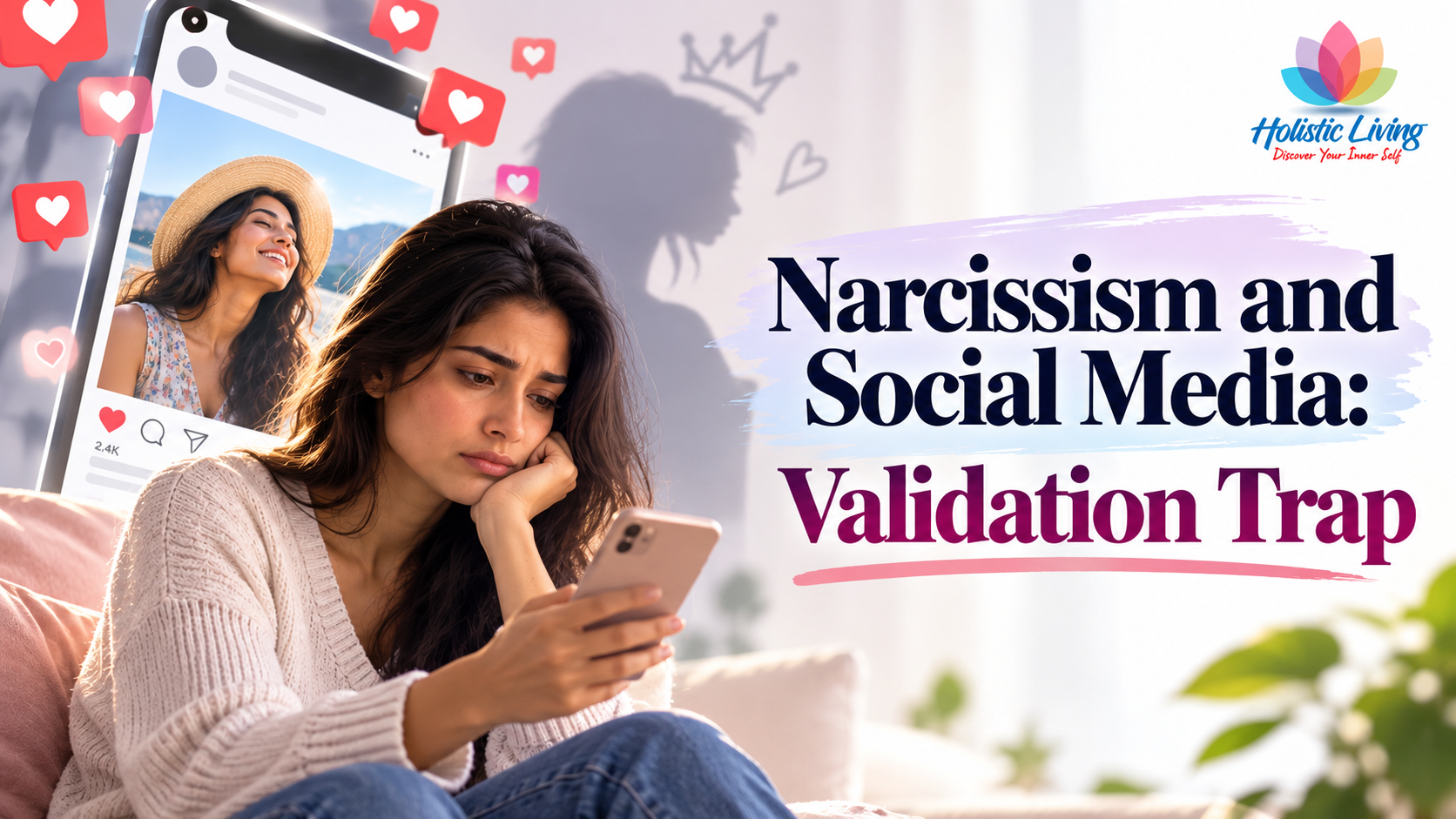
You post a photograph. You wait. You check your phone.
Five minutes pass.
No likes.
Ten minutes.
Still nothing.
Suddenly, a thought enters your mind.
“Why is nobody noticing me?”
You check again.
Perhaps the photograph wasn’t good enough.
Maybe the caption was boring.
Or perhaps people simply don’t care.
An ordinary social media post has somehow become a test of your self-worth.
Sound familiar?
You’re not alone.
Social media has changed how we seek attention, measure success, and experience approval.
For some people, especially those with pronounced narcissistic traits, online validation can become particularly important.
But here’s the surprising part.
The problem isn’t always wanting attention. It’s what happens when attention becomes necessary to feel worthy.
Why Does Social Media Validation Feel So Powerful?
Remember when compliments happened naturally?
A friend appreciated your work.
A colleague recognised your effort.
Someone thanked you for helping them.
Those moments felt meaningful.
Today, appreciation often arrives through a screen.
A like.
A comment.
A share.
A new follower.
Each notification offers a small moment of excitement.
And because these rewards are unpredictable, you may feel tempted to keep checking.
Did someone notice me?
Did my post perform well?
Am I still interesting?
Over time, this habit can turn social media engagement into a source of emotional reassurance.
However, enjoying likes doesn’t mean someone is narcissistic.
The concern begins when online approval starts controlling confidence, mood, or daily behaviour.
Narcissism and Social Media: What’s the Connection?
Narcissism isn’t simply about taking selfies or enjoying compliments.
Narcissistic traits exist on a spectrum.
Some people have a strong desire for admiration, status, and recognition.
Others experience deep insecurity and become highly sensitive to criticism or rejection.
Researchers have examined connections between narcissistic traits and social media behaviour. Some studies find associations with activities such as self-promotion and online engagement, although findings vary depending on the traits, platforms, and behaviours measured.
Two patterns are particularly useful to understand.
Grandiose Narcissism: The Need to Look Exceptional
Imagine someone who posts every achievement.
A promotion.
A luxury holiday.
An expensive purchase.
An impressive social gathering.
There’s nothing inherently wrong with sharing success.
But problems may develop when the person’s sense of importance depends heavily on public admiration.
A successful post feels wonderful.
An ignored post feels humiliating.
The question becomes:
“If nobody admires my success, does it still matter?”
Vulnerable Narcissism: The Fear of Being Overlooked
Now imagine someone who rarely appears confident.
They post a photograph.
Then immediately worry.
“Do I look good?”
“Why hasn’t anyone commented?”
“Did I embarrass myself?”
They may delete posts that receive little attention.
Compare themselves constantly.
Or interpret silence as rejection.
Vulnerable narcissistic traits can involve insecurity, shame, and heightened sensitivity to evaluation.
Although these two patterns differ, both may involve difficulties maintaining stable self-esteem.
One person seeks admiration to feel superior. Another may seek reassurance to feel acceptable.
Neither pattern can be diagnosed from social media activity alone.
The Dangerous Validation Trap: When Likes Become Self-Worth
Meet Rhea.
She’s 39.
Successful at work.
Married.
A mother of two.
From the outside, her life looks comfortable.
But every evening, she spends hours scrolling.
She sees a friend’s international holiday.
A colleague’s promotion.
Someone celebrating a perfect anniversary.
Then she looks at her own life.
The unfinished laundry.
The stressful meetings.
The ordinary dinner.
Suddenly, everything feels disappointing.
One evening, she uploads a family photograph.
Within minutes, she checks the likes.
Then checks again.
And again.
Her husband asks:
“Why are you upset?”
She replies:
“Nobody liked my picture.”
He looks confused.
But Rhea isn’t really upset about a photograph.
She’s wondering whether her life is impressive enough.
That’s the validation trap.
Your happiness becomes connected to other people’s reactions.
And the more you compare, the harder it becomes to appreciate what you already have.
Why Does Social Media Validation Become Addictive?
The word addictive is often used casually to describe constant scrolling and checking.
Not everyone who frequently uses social media has an addiction.
However, some people develop problematic patterns that feel difficult to control.
Here’s how the cycle can unfold.
Step 1: You post something.
You hope people will notice.
Step 2: You receive attention.
Likes and comments make you feel appreciated.
Step 3: The excitement fades.
You start wondering whether the next post will perform better.
Step 4: You seek reassurance again.
You check notifications, compare engagement, or create another post.
Step 5: Your mood becomes tied to the results.
High engagement brings temporary confidence.
Low engagement triggers disappointment.
Eventually, posting may feel less like self-expression and more like emotional pressure.
You stop sharing because something matters to you. You start sharing because you need someone else to confirm that it matters.
Seven Signs You’re Becoming Dependent on Online Validation
How do you know when ordinary social media use has become unhealthy?
Notice whether these patterns feel familiar.
- You check notifications repeatedly. Even when you’re busy, you feel an urge to look at your phone.
- Low engagement affects your mood. An ignored post makes you feel embarrassed, rejected, or inadequate.
- You compare your life constantly. Other people’s achievements make your own progress feel insignificant.
- You delete posts that receive little attention. Instead of expressing yourself, you focus on public approval.
- You struggle to enjoy private moments. An experience feels incomplete unless you photograph or share it.
- You seek compliments to feel confident. Your self-esteem rises and falls depending on online reactions.
- You feel restless when disconnected. Time away from social media creates anxiety or fear of missing out.
These signs don’t establish narcissism or a mental health diagnosis.
They simply suggest that your relationship with social media may deserve attention.
How Social Media Comparison Can Damage Self-Esteem
Here’s something we often forget.
You’re comparing your everyday life with someone else’s carefully selected moments.
You see the holiday.
Not the financial stress.
You see the smiling couple.
Not their disagreements.
You see the promotion.
Not the years of rejection.
Yet your mind treats these photographs as evidence that everyone else is doing better.
For adults in their 30s, 40s, 50s, and 60s, this comparison can feel especially painful.
You may begin questioning your career.
Your appearance.
Your marriage.
Your achievements.
Even your purpose.
And gradually, your internal question changes.
Instead of asking:
“Am I happy with my life?”
You ask:
“Does my life look successful to everyone else?”
That shift can quietly undermine emotional wellbeing.
What Happens If You Ignore the Need for Validation?
An occasional disappointment over social media engagement is normal.
But persistent approval-seeking can create difficulties.
1. Your Confidence Becomes Unstable
One popular post makes you feel important.
One ignored post makes you question yourself.
Your self-esteem becomes dependent on reactions you cannot control.
2. Anxiety and Overthinking May Increase
You replay comments.
Analyse responses.
Wonder why someone unfollowed you.
Even ordinary online interactions begin to feel personal.
3. Real Relationships May Receive Less Attention
Imagine sitting with your family while constantly checking your phone.
You’re physically present.
But emotionally distracted.
Over time, excessive social media use can interfere with meaningful conversations and shared experiences.
4. Authenticity Becomes Difficult
You may start presenting the version of yourself that receives the most attention.
The perfect appearance.
The impressive lifestyle.
The constantly happy personality.
But maintaining that image can become exhausting.
The more energy you spend looking fulfilled, the less time you may spend understanding what genuinely fulfils you.
These outcomes aren’t inevitable. They depend on individual circumstances, habits, and mental health.
How to Break Free From Social Media Validation
The good news?
You don’t necessarily need to delete every social media account.
Instead, begin changing your relationship with online approval.
1. Ask Yourself Why You’re Posting
Before uploading something, pause.
Ask:
“Am I sharing this because I enjoy it, or because I need a particular reaction?”
Neither answer makes you a bad person.
But understanding your motivation creates awareness.
2. Stop Checking Immediately
Post something.
Then put your phone away.
Give yourself time to enjoy another activity.
This small boundary can help reduce habitual checking.
3. Build Confidence Outside Social Media
Do something meaningful without sharing it.
Read a book.
Complete a personal goal.
Spend time with family.
Learn a skill.
Enjoy a quiet walk.
Let some achievements belong only to you.
Not every meaningful moment needs an audience.
4. Challenge Comparison Thoughts
When you catch yourself thinking:
“Everyone is doing better than me,”
Ask:
“Am I comparing my complete life with someone else’s highlights?”
Remember that online content rarely tells the whole story.
5. Create Healthier Digital Boundaries
Turn off unnecessary notifications.
Keep your phone away during meals.
Avoid scrolling immediately before sleeping.
Set realistic limits on social media use.
Small changes can help you regain control over your attention.
Can Therapy Help With Social Media Validation and Narcissistic Traits?
Yes. Therapy may help when approval-seeking, self-esteem difficulties, or problematic social media habits cause significant distress.
Different therapeutic approaches address different concerns.
Cognitive Behavioural Therapy (CBT) can help identify thoughts such as:
“If nobody likes my post, I’m worthless.”
You can learn to challenge these beliefs and develop more balanced thinking.
Schema Therapy may help explore longstanding patterns involving inadequacy, approval-seeking, shame, or unmet emotional needs.
Acceptance and Commitment Therapy (ACT) can support psychological flexibility and help people act according to personal values rather than immediate emotional urges.
Psychodynamic Therapy may help explore deeper conflicts around identity, self-esteem, relationships, and the need for recognition.
Group Therapy may provide opportunities to develop interpersonal awareness and experience supportive, authentic connection.
The most appropriate approach depends on the individual, their symptoms, and a professional assessment.
Importantly, having narcissistic traits doesn’t automatically mean someone has Narcissistic Personality Disorder.
Therapy in Mumbai: Rebuilding Self-Worth Beyond Social Media
Sometimes, the constant need for validation isn’t really about social media.
It’s about something deeper.
Perhaps you grew up believing love had to be earned through achievement.
Maybe criticism made you afraid of failure.
Or perhaps you’ve spent years feeling that you must impress others to be accepted.
These experiences can influence how you seek reassurance as an adult, although they aren’t the only possible causes.
At Holistic Living Wellness Studio, Mumbai, counselling can help individuals explore low self-esteem, emotional insecurity, comparison, relationship difficulties, and patterns of approval-seeking.
Depending on your needs, a qualified practitioner may help you understand your emotional triggers, challenge unhelpful beliefs, and develop healthier ways to build confidence.
Because the goal isn’t to stop caring about people. It’s to stop making their approval the foundation of your identity.
If online validation is affecting your peace of mind, consider starting with a free 10-minute initial consultation to discuss suitable support.
Connect with Holistic Living Wellness Studio
The Most Important Question: Who Are You Without the Likes?
Imagine this.
You visit a beautiful place.
The weather is perfect.
You’re surrounded by people you love.
For once, you don’t reach for your phone.
You don’t take a photograph.
You don’t think about captions.
You don’t wonder how many likes the moment might receive.
You simply enjoy it.
And something feels different.
Peaceful.
Uncomplicated.
Real.
Because for those few minutes, you aren’t trying to impress anyone.
You’re simply living.
Social media can help us connect, express ourselves, and celebrate important moments.
But it cannot determine our value.
A photograph with five likes isn’t worth less than one with five thousand.
A quiet life isn’t necessarily an unsuccessful life.
And being unnoticed online doesn’t mean you’re unimportant.
The real danger begins when you become so busy building a life that looks impressive that you forget to build one that feels meaningful.
So the next time you feel compelled to check your notifications, ask yourself:
“Am I looking for connection, or am I asking strangers to tell me I’m enough?”
Because here’s the truth.
You don’t need to become more visible to become more valuable.
You need to remember that your worth existed long before anyone pressed the like button.
Frequently Asked Questions
Does narcissism predict social media use?
Research has found associations between certain narcissistic traits and some social media behaviours. However, the relationship varies across individuals and platforms. Frequent posting alone does not indicate narcissism.
Why do social media likes feel so rewarding?
Likes provide social feedback and may reinforce posting and checking habits. Their emotional impact depends partly on how much importance someone places on external approval.
Can social media cause narcissism?
There isn’t sufficient evidence to conclude that social media directly causes Narcissistic Personality Disorder. However, some online environments may encourage self-promotion, comparison, and validation-seeking.
How do I stop seeking validation on social media?
Begin by reducing notification checking, limiting comparison, developing offline interests, and challenging beliefs that connect your worth to engagement numbers.
Can counselling help with low self-esteem and social media addiction?
Counselling may help individuals manage problematic social media habits, anxiety, comparison, and approval-seeking. A qualified professional can recommend appropriate support based on individual needs.