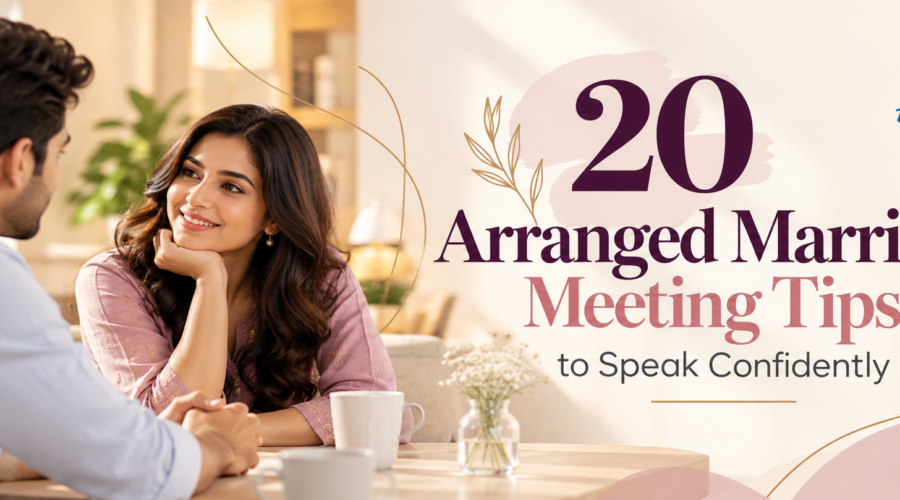
20 Arranged Marriage Meeting Tips to Talk Confidently
Your first arranged marriage meeting can feel overwhelming when every question seems important. You may worry about making a good impression, saying the wrong thing, or being rejected. These 20 arranged marriage meeting tips will help you manage nervousness, start natural conversations, ask meaningful questions, and understand compatibility. Because meeting a potential life partner should feel like an opportunity to connect, not an examination.
<details>
<summary><strong>Table of Contents – Click to Expand</strong></summary>
Why Do Arranged Marriage Meetings Feel Stressful?
How to Prepare Before the Meeting
How to Talk Confidently During the Meeting
How to Manage Nervousness and Overthinking
How to Recognise Compatibility
What Questions Should You Ask?
What If Arranged Marriage Anxiety Persists?
How Can Counselling Help?
Frequently Asked Questions
Final Thoughts
</details>
Why Do Arranged Marriage Meetings Feel Stressful?
“Tell me about yourself.”
Five ordinary words. Yet suddenly, you cannot remember what you planned to say.
You smile, mention your work, and answer a few questions. The meeting ends pleasantly. But on your way home, you begin replaying everything.
Did I talk too much? Was I interesting enough? What if they didn’t like me?
This is a familiar experience for people preparing for their first arranged marriage meeting.
The pressure often comes from feeling evaluated. Your career, personality, family background, lifestyle, and future expectations may all become part of one conversation.
However, the meeting is not an interview where one person decides whether the other deserves approval.
Both people are deciding whether they feel comfortable, respected, and compatible.
That shift in perspective is one of the most useful arranged marriage conversation tips.
Instead of asking, “Will they choose me?” try asking, “Could we genuinely build a life together?”
How to Prepare Before the Meeting
Confidence rarely means having every answer ready. More often, it means knowing what matters to you and feeling comfortable expressing it.
These first five tips can help you prepare without turning the meeting into a performance.
1. Stop Treating the Meeting Like an Interview
An arranged marriage meeting is a conversation between two people exploring a possible future.
You do not need impressive answers to every question. Instead, focus on whether your personalities, expectations, and values seem compatible.
Confidence begins when you stop trying to earn approval.
2. Understand What You Want From Marriage
Before discussing someone else’s expectations, reflect on your own.
Consider what matters most to you:
Emotional connection and mutual respect
Career goals and financial independence
Family involvement and responsibilities
Lifestyle preferences and personal space
Children and long-term plans
Knowing your priorities helps you communicate honestly rather than agreeing with everything.
3. Prepare Conversation Topics, Not Scripts
If you’re wondering what to talk about in an arranged marriage meeting, prepare a few meaningful subjects.
You might discuss work, hobbies, family traditions, travel, daily routines, or future aspirations.
However, avoid memorising perfect responses. Natural conversations allow both people to reveal their personalities.
4. Practise a Simple Introduction
“Tell me about yourself” often feels difficult because people try to include everything.
Instead, prepare a short introduction covering your work, interests, and values.
For example:
“I work in marketing, enjoy travelling, and value honest communication. Family is important to me, but I also appreciate personal independence.”
It sounds conversational because it is personal, not rehearsed.
5. Choose Comfort Over Perfection
Wear something that feels appropriate and comfortable. Arrive with enough time to settle in.
Also, avoid spending hours imagining every possible question.
A little preparation can help. Excessive preparation may increase first meeting anxiety by making the experience seem more intimidating than it needs to be.
How to Talk Confidently During the Meeting
Imagine that the conversation begins well. You exchange introductions, discuss your careers, and discover a shared interest.
Then comes an unexpected question.
You pause.
For a moment, you worry that the silence has ruined everything.
But a meaningful conversation does not require uninterrupted talking.
6. Allow Natural Pauses
You can take a moment before answering.
Try saying, “That’s an interesting question. Let me think.”
A thoughtful pause is not a sign of poor communication. It allows you to respond more clearly.
7. Ask Questions That Invite Stories
Instead of asking only factual questions, invite the other person to share experiences.
For example, replace “Do you like travelling?” with “What’s the most memorable trip you’ve taken?”
Stories often reveal humour, curiosity, priorities, and personality.
8. Discuss What Marriage Means to Both of You
People may enter marriage with different expectations.
Some prioritise companionship. Others place greater importance on family involvement, independence, or shared ambitions.
Ask, “What does a happy marriage look like to you?”
Then share your perspective.
9. Explore How They Handle Disagreements
Marriage compatibility involves more than shared interests.
It also includes how two people respond when they disagree.
A gentle question might be:
“When something bothers you, do you prefer discussing it immediately or taking some time first?”
Listen to the answer without treating one communication style as automatically wrong.
10. Express Different Opinions Respectfully
Suppose the other person wants to relocate, while you prefer staying close to your family.
You do not need to agree simply to maintain a pleasant atmosphere.
Try saying, “I understand your perspective, but I feel differently about relocating.”
Healthy communication makes room for differences without demanding agreement.
How to Manage Nervousness and Overthinking
Even confident people can feel nervous when meeting a potential life partner.
The goal is not to eliminate every uncomfortable feeling. It is to prevent nervousness from controlling the conversation.
11. Stop Trying to Appear Perfect
You might forget a word, laugh awkwardly, or struggle with a question.
That does not mean the meeting has gone badly.
Remember, the other person may be feeling equally nervous.
Allow yourself to be human rather than trying to deliver a flawless performance.
12. Recognise Your Stress Signals
Anxiety can affect both thoughts and physical sensations.
You may notice:
Faster breathing
Tight shoulders
Restless hands
A racing heartbeat
Difficulty concentrating
These experiences can accompany nervousness. They do not automatically indicate an anxiety disorder or an unsuccessful meeting.
13. Try a 60-Second Grounding Exercise
Before the meeting, place both feet on the floor and relax your shoulders.
Take a few comfortable, unforced breaths. Notice your surroundings.
Then remind yourself:
“I am here to understand someone, not to prove my worth.”
This brief exercise may help you feel more present.
14. Don’t Judge Compatibility by Nervousness Alone
Perhaps you were quieter than usual. Maybe the conversation took time to become comfortable.
That does not automatically mean you are incompatible.
Consider whether the other person was respectful, curious, and willing to listen.
If both people are interested, another conversation may offer greater clarity.
15. Understand That Rejection Isn’t Personal Failure
Not every arranged marriage meeting leads to a relationship.
Two people may have different goals, lifestyles, or expectations despite genuinely respecting each other.
Rejection can feel disappointing, but incompatibility is not evidence that something is wrong with you.
A meeting that ends without a match can still be a useful outcome.
How to Recognise Compatibility
Confidence also means recognising when something does not feel right.
These final five tips help you protect your individuality while making thoughtful relationship decisions.
16. Notice People-Pleasing Behaviour
Do you agree with every opinion because you’re afraid of being rejected?
Perhaps you repeatedly say, “Whatever you prefer,” even when you have strong preferences.
Being considerate is valuable. However, constantly hiding your needs can create unrealistic expectations.
17. Understand Your Fear of Judgement
Sometimes, the difficult part isn’t speaking to someone new.
It’s worrying about how they will perceive you.
You may fear being judged for your career, personality, family circumstances, or previous relationship experiences.
Recognising these concerns can help you separate genuine compatibility questions from self-critical thoughts.
18. Reflect Instead of Overanalysing
After the meeting, avoid examining every smile, pause, or expression.
Instead, ask yourself:
Did I feel comfortable expressing my views?
Did the other person listen respectfully?
Were our important expectations compatible?
Did I feel pressured to agree?
Would I like another conversation?
These questions offer more useful information than guessing what every gesture meant.
19. Practise Setting Boundaries
You do not have to answer every personal question immediately.
Useful responses include:
“I’d prefer to discuss that once we know each other better.”
“That’s something important to me.”
“I’d like more time before making a decision.”
Assertive communication helps you remain respectful without compromising your comfort.
20. Remember Why You’re Really There
You are not meeting someone to become their ideal partner for one hour.
You are exploring whether two real people could develop a meaningful relationship.
Bring your interests, questions, values, and genuine personality into the conversation.
A successful meeting is not necessarily one that leads to marriage.
It is one that helps both people make an informed, comfortable choice.
What Questions Should You Ask?
Many people search for questions to ask in an arranged marriage meeting, but the most useful questions encourage discussion rather than interrogation.
What does a typical weekend look like for you?
What does a supportive marriage mean to you?
How do you imagine balancing work and personal life?
What role would you like both families to play?
How do you usually handle disagreements?
How important is personal space in a relationship?
What are your priorities for the next five years?
You do not need to ask everything during the first meeting.
Instead, choose questions that feel appropriate and allow conversations to develop naturally.
What If Arranged Marriage Anxiety Persists?
Feeling nervous before meeting someone new is understandable.
However, persistent arranged marriage anxiety deserves attention when it begins interfering with your everyday life.
You might repeatedly cancel meetings, struggle to sleep, avoid conversations, or experience intense fear of rejection.
Sometimes, these concerns overlap with social anxiety, low self-esteem, perfectionism, or pressure from family expectations.
Research-based clinical guidance recognises that persistent social anxiety can involve fear of negative evaluation, avoidance, and excessive reflection after social interactions.
The UK’s National Institute for Health and Care Excellence (NICE) recommends individual Cognitive Behavioural Therapy (CBT) specifically developed for adults diagnosed with social anxiety disorder. This includes addressing negative beliefs, self-focused attention, and anticipatory or post-event worry.
Not everyone who feels nervous about arranged marriage needs therapy. However, when fear repeatedly limits your choices, professional support can help you understand what is happening.
How Can Counselling Help?
Counselling for arranged marriage anxiety can provide a space to explore the concerns behind communication difficulties.
For some individuals, the challenge involves fear of rejection. Others struggle with family pressure, self-doubt, past relationship experiences, or difficulty expressing boundaries.
Depending on individual needs, psychological approaches such as CBT, REBT, and assertiveness training can help people examine unhelpful thoughts and develop more confident communication habits.
At Holistic Living Wellness Studio in Mumbai, the emphasis is on understanding emotional patterns and choosing support suited to the individual, rather than applying the same approach to everyone.
Sanjeev Mittal’s Approach to Emotional Confidence
Sanjeev Mittal, Founder of Holistic Living Wellness Studio, is a Certified Clinical Hypnotherapist, Past Life Regression Therapist, and Relationship Coach with over a decade of experience supporting individuals through emotional and relationship concerns.
According to the studio’s professional profile, he has worked with over 5,000 clients across India and internationally.
His integrative practice draws on clinical hypnotherapy, inner child-focused work, and past life regression within a broader holistic framework. These approaches have different evidence bases and are not substitutes for established treatments for diagnosed anxiety disorders.
Under his leadership, Holistic Living Wellness Studio operates as an ISO-certified and IPHM-accredited wellness institution in Mumbai, with an emphasis on confidentiality, ethical practice, and personalised care.
For someone experiencing fear of judgement or uncertainty about marriage decisions, the first step may simply be understanding the beliefs and expectations that make conversations feel difficult.
Frequently Asked Questions
1. How do I talk confidently in my first arranged marriage meeting?
Prepare a few meaningful topics, practise a short introduction, and focus on understanding the other person. Speak at a comfortable pace, ask open-ended questions, and allow natural pauses. Confidence comes from communicating honestly, not memorising perfect answers.
2. What should I talk about in an arranged marriage meeting?
Discuss interests, daily routines, career plans, family expectations, lifestyle preferences, communication habits, and long-term goals. Begin with comfortable subjects before exploring more personal expectations.
3. How can I overcome nervousness before an arranged marriage meeting?
Prepare without over-rehearsing, arrive early, and practise a brief grounding exercise. Remind yourself that the meeting is a mutual conversation. If anxiety remains intense or causes repeated avoidance, consider professional support.
4. What questions should I ask a potential marriage partner?
Ask about their expectations from marriage, family involvement, career aspirations, conflict resolution, financial responsibilities, and personal boundaries. Focus on understanding their values rather than collecting perfect answers.
5. How do I know if someone is compatible for arranged marriage?
Look for mutual respect, comfortable communication, compatible priorities, emotional maturity, and willingness to discuss differences. One meeting rarely provides complete certainty, so take appropriate time before making a decision.
6. What should I avoid during my first arranged marriage meeting?
Avoid exaggerating your achievements, agreeing with everything, asking overly intrusive questions immediately, or treating the meeting like an interview. Also, avoid making commitments before you feel ready.
7. Is it normal to feel anxious before meeting a potential marriage partner?
Yes. Some nervousness is common when a decision feels personally important. However, persistent anxiety that disrupts sleep, communication, or everyday functioning may benefit from professional assessment and support.
8. Can counselling improve confidence before arranged marriage meetings?
Counselling may help individuals understand fear of rejection, challenge self-critical thoughts, practise assertive communication, and manage social anxiety. The appropriate approach depends on the person’s concerns and whether a diagnosable condition is present.
Final Thoughts: Your Confidence Matters More Than a Perfect Impression
Your first arranged marriage meeting should not feel like a test of your worth. It is an opportunity to discover whether two people can communicate, respect differences, and imagine a meaningful future. If anxiety, self-doubt, or fear of judgement makes that difficult, Holistic Living Wellness Studio in Mumbai offers personalised counselling support. Begin with a Free 10-Minute Initial Consultation and take the first step towards greater clarity and confidence.
Written by Editor HL Library Team
Reviewed by Sanjeev Mittal, Founder of Holistic Living Wellness Studio, Certified Relationship Coach, Clinical Hypnotherapist and Family Counsellor.