

Am I the Narcissist? Understanding Self-Doubt After Gaslighting
Gaslighting is a form of psychological manipulation in which a narcissist person repeatedly makes someone question their own memories, perceptions, feelings, or understanding of events.
A 2026 review and theoretical paper by Klein, Wood, and Bartz explains gaslighting as psychological manipulation that can cause people to doubt their perception of reality, lose a sense of agency, and experience emotional and mental instability. The authors propose that close relationships are particularly powerful because people naturally rely on significant others to help validate their understanding of themselves and the world.
Holistic Living Wellness Studio offers tailored therapy plans to help you overcome this fear.
Book a Free 10-minute consultation with their expert counsellors and take the first step toward greater confidence.

Have you ever walked away from an argument and thought, “Maybe I am the problem?”
You replay the conversation.
You question your words.
You wonder if you were too sensitive.
Too emotional.
Too demanding.
Too difficult.
And then comes the frightening thought:
“What if I am actually a narcissist?”
For many people who have experienced gaslighting, this question can become painfully familiar.
Gaslighting can make you distrust your own thoughts, feelings, memories, and reactions. Over time, you may stop asking, “Was I treated unfairly?” and start asking, “What is wrong with me?”
That shift is important to understand.
At Holistic Living Wellness Studio, one of Mumbai’s trusted therapy and counselling spaces, we offer a free 10-minute chat with our therapists—a gentle, judgment-free first step if you find yourself constantly questioning your thoughts, feelings, or actions after experiencing gaslighting.
You don’t have to figure it all out on your own. This article will help you understand how gaslighting can affect self-trust, create persistent self-doubt, and leave you wondering, “Am I the problem?”—and how you can begin finding your confidence and sense of self again, one step at a time.
What Is Gaslighting?
Gaslighting is a form of psychological manipulation.
It happens when someone repeatedly makes you doubt your perception of reality.
They may deny something they clearly said.
They may tell you that you are remembering things incorrectly.
They may dismiss your feelings as exaggerated.
When this happens repeatedly, something inside you can change.
You begin to look outside yourself for confirmation.
You stop trusting your instincts.
You may even apologise when you have done nothing wrong.
And eventually, you may start believing the story being told about you.
Why Do You Start Wondering If You Are a Narcissist?
This is where things can become confusing.
A person who has been accused of being selfish, controlling, dramatic, or narcissistic may eventually internalise those labels.
You may begin examining every reaction.
This constant self-analysis can feel like self-awareness.
But there is a difference.
Healthy self-reflection asks:
“What can I learn from my behaviour?”
Gaslighting-driven self-doubt asks:
“Is everything wrong with me?”
The first creates growth.
The second creates shame.
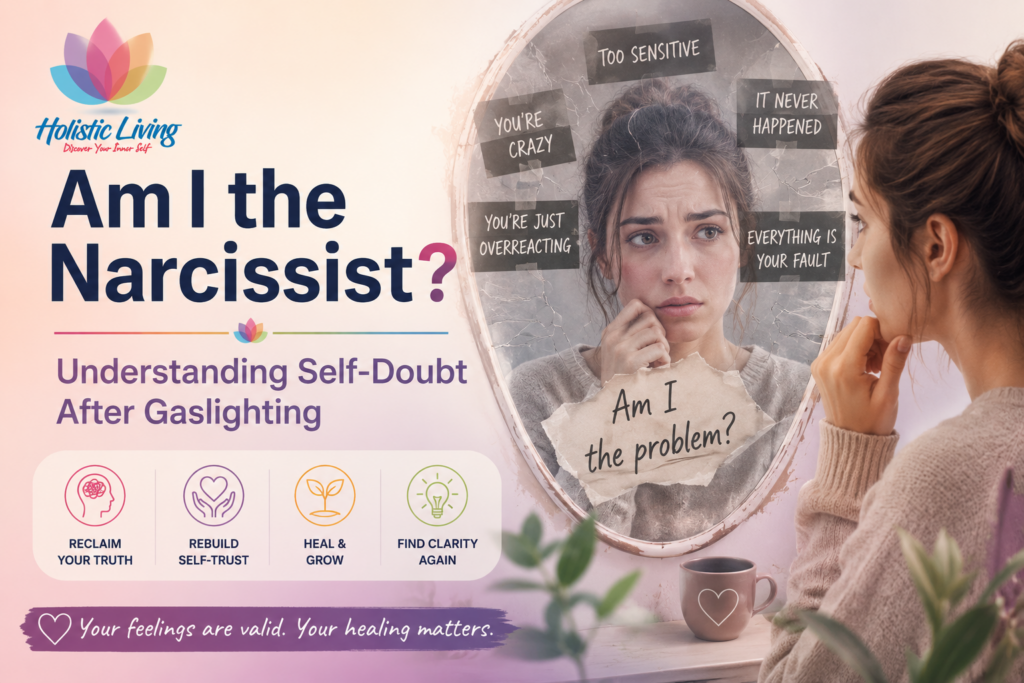
Sanjeev Mittal, a renowned therapist and holistic practitioner, brings decades of experience in helping individuals understand emotional distress at its root. He explains that the self-doubt created by gaslighting can be like a crack in a mirror—it may seem small at first, but when left unaddressed, it can gradually distort the way you see yourself, your emotions, your memories, and your relationships. Over time, constantly questioning yourself can affect confidence, decision-making, boundaries, and your ability to trust your own judgment.
Narcissism Is More Than Having Flaws
Everyone can behave selfishly sometimes.
Everyone gets defensive.
Everyone makes mistakes.
Everyone can say something hurtful during an argument.
These behaviours alone do not mean someone has narcissistic personality disorder.
Narcissism exists on a spectrum. Certain narcissistic traits can appear in many people without constituting a personality disorder.
The Question That May Matter More
Instead of repeatedly asking,
“Am I a narcissist?”
try asking:
“What happens when I realise I have hurt someone?”
Remember, having some unhealthy behaviours does not automatically make you a narcissist.
The goal is not to prove that you are perfect.
The goal is to understand yourself honestly.
What Gaslighting Does to Your Self-Trust
Imagine hearing the same message repeatedly:
Eventually, your internal voice may become quieter.
The other person’s voice may become louder.
This is exhausting.
And it can create a painful cycle.
Something happens → you react → your reaction is criticised → you doubt yourself → you apologise → you question yourself even more.
Over time, your confidence in your own emotional reality can weaken.
But What If You Actually Made Mistakes?
This is where balanced self-reflection matters.
Healing does not require you to believe that you were always right.
Two things can be true at once:
“I made mistakes.”
And:
“I did not deserve to be manipulated.”
Taking responsibility does not mean taking responsibility for everything.
Look at Patterns, Not Isolated Moments
One emotional reaction does not define your personality.
Look at your broader pattern.
Most importantly, can you examine yourself without needing to protect a perfect image of yourself?
Rebuilding Trust in Yourself
If gaslighting has affected your self-confidence, healing may begin with small steps.
- Start documenting your experiences.
- Write down what happened.
- Record how you felt.
- Separate facts from interpretations.
- Notice what triggered your self-doubt.
Pay attention to repeated patterns rather than one-off disagreements.
Most importantly, give your emotions space before judging them.
- Feeling angry does not automatically make you aggressive.
- Feeling hurt does not make you weak.
Wanting reassurance does not automatically make you needy.
Setting a boundary does not make you controlling.
Having needs does not make you selfish.
Your feelings are information.
They are not always instructions.
But they deserve to be heard.
You Do Not Have to Choose Between Accountability and Self-Compassion
Perhaps the biggest trap after gaslighting is believing that you must choose.
Either you are completely innocent.
Or you are completely at fault.
Real life is rarely that simple.
Physical,Emotional,Cognitive Symptoms of Gaslighting.
Gaslighting-related stress can affect the body as well as the mind.
- Constant fatigue or low energy
- Difficulty falling or staying asleep
- Headaches or tension headaches
- Muscle tension, especially in the neck and shoulders
- Racing heartbeat during conflict or confrontation
- Feeling restless or constantly “on edge”
- Changes in appetite
- Stomach discomfort or digestive problems
- Sweating or trembling when faced with conflict
- Feeling physically drained after conversations
- Difficulty relaxing, even when nothing is happening
- Frequent stress-related aches and pains
The body may remain in a state of heightened alertness, especially when you are constantly anticipating criticism, conflict, or being blamed.
Cognitive Symptoms
This is often where the impact of gaslighting becomes especially noticeable.
You may experience:
- Constantly questioning your own memory
- Difficulty trusting your judgment
- Overanalysing conversations
- Replaying arguments repeatedly
- Difficulty making decisions
- Excessive self-questioning
- Confusion about what actually happened
- Difficulty concentrating
- Forgetfulness or mental “blankness” during stressful situations
- Constantly looking for evidence that you were wrong
- Seeking reassurance from others
- Assuming you misunderstood situations
- Difficulty identifying what you genuinely think or feel
- Excessive comparison of your behaviour with others
- Thinking, “Maybe I am the problem.”
- Fear that normal mistakes are evidence of being narcissistic
A particularly common pattern is rumination.
You may spend hours analysing a conversation that lasted only a few minutes.
The mind keeps searching for certainty.
But the more you analyse, the more uncertain you may feel.
Emotional Symptoms
The emotional impact can be profound.
You may experience:
- Persistent self-doubt
- Shame
- Guilt
- Anxiety
- Fear of conflict
- Emotional exhaustion
- Feeling misunderstood
- Feeling emotionally invalidated
- Low self-confidence
- Feeling responsible for other people’s emotions
- Fear of being perceived as “bad”
- Difficulty trusting others
- Difficulty trusting yourself
- Sadness or emotional numbness
- Irritability
- Feeling powerless
- Fear of making mistakes
- Excessive need for reassurance
- Feeling disconnected from your own needs
You may also experience a painful contradiction:
You want to stand up for yourself, but you are afraid that doing so makes you selfish.
That conflict can be emotionally exhausting.
A Particularly Important Sign: Excessive Self-Blame
One of the most significant patterns to watch is taking responsibility for everything.
Healthy accountability sounds different.
It allows you to say:
“I made a mistake, and I can learn from it.”
Gaslighting-related self-blame often sounds like:
“Everything must be my fault.”
Those are not the same thing.
Remember: These Symptoms Do Not Diagnose Narcissism
Experiencing these symptoms does not mean you have narcissistic personality disorder.
In fact, intense self-questioning can occur for many reasons, including relationship stress, anxiety, trauma, low self-esteem, or prolonged emotional manipulation.
A diagnosis of narcissistic personality disorder requires assessment by a qualified mental-health professional. It cannot be established through an online checklist or because someone has called you a narcissist.
The more useful question may therefore be:
“What has happened to my ability to trust myself?”
rather than:
“What is wrong with me?”
That shift can be an important first step toward rebuilding self-trust.
Absolutely. When gaslighting has left you questioning your memory, emotions, judgment, or even your personality, recovery is less about “proving who was right” and more about rebuilding trust in yourself.
What happens when you don’t work on these symptoms –
If symptoms related to gaslighting are left unaddressed, they can gradually affect the way you think, feel, behave, relate to others, and see yourself. The effects may not appear all at once. They can build slowly.
What Can Happen When These Symptoms Are Not Addressed?
1. Self-Doubt Can Become Your Default
You may start questioning almost every decision.Eventually, you may stop trusting your own judgment.This can make even simple decisions feel overwhelming.
2. Your Self-Esteem May Decline
Repeatedly blaming yourself can change the way you see yourself.
You may begin to believe:
“I am difficult.”
“I am too emotional.”
“I always mess things up.”
Over time, temporary mistakes can become permanent labels about your identity.
3. Anxiety and Rumination Can Increase
Your mind may constantly scan for what went wrong.This can create a cycle of overthinking → anxiety → reassurance-seeking → temporary relief → more overthinking.
4. You May Lose Touch With Your Own Needs
When you become overly focused on keeping other people happy, your own needs can become secondary.
5. Boundaries Can Become Difficult
You may feel guilty for saying no.
You may explain yourself excessively.
You may tolerate behaviour that makes you uncomfortable because you fear being labelled selfish, difficult, or uncaring.
The result can be a pattern of over-accommodating others while neglecting yourself.
6. Physical Stress Can Continue
Unresolved psychological stress can contribute to ongoing physical symptoms such as:
- Sleep difficulties
- Fatigue
- Muscle tension
- Headaches
- Restlessness
- Changes in appetite
- Digestive discomfort
Persistent or unexplained physical symptoms should also be discussed with a healthcare professional rather than automatically attributed to gaslighting.
7. Relationships May Become Harder
When you no longer trust your own judgment, relationships can become confusing.Even healthy relationships can feel unsafe when your internal sense of security has been damaged.
8. You May Start Accepting Unhealthy Behaviour
Perhaps one of the most concerning consequences is normalising behaviour that should concern you.When self-blame becomes automatic, unhealthy behaviour can become easier to tolerate.
9. Emotional Numbness Can Develop
Constant emotional stress can become exhausting.
Instead of feeling everything intensely, you may eventually feel very little.
You may disconnect from your emotions because feeling them feels overwhelming.
10. Your Fear of Being a “Narcissist” Can Become Its Own Cycle
Ironically, constantly worrying “Am I a narcissist?” can become another form of obsessive self-monitoring.
Instead of understanding your behaviour, you may become trapped in judging your entire personality.
A healthier goal is not to prove that you are “good” or “not a narcissist.”
The goal is to develop self-awareness, accountability, empathy, boundaries, and self-trust.
The Important Takeaway
Unaddressed gaslighting-related self-doubt can gradually change your relationship with yourself.
You may stop trusting your memories.
Then your decisions.
Then your emotions.
And eventually, even your identity.
But this pattern is not necessarily permanent.
Self-trust can be rebuilt.
With reflection, healthy boundaries, supportive relationships, and professional help when needed, you can learn to distinguish between genuine accountability and unnecessary self-blame.
You simply need to become someone who can say:
“I can acknowledge my mistakes without making the mistake myself.”
How to Deal With Symptoms of Gaslighting
1. Start Rebuilding Trust in Your Own Reality
If you constantly think, “Maybe I imagined it,” start recording important events.
Write down:
- What happened.
- What was said.
- How you felt.
- What you did in response.
- What happened afterward.
Keep the notes factual rather than judgmental.
Over time, this can help you notice patterns and reduce the tendency to second-guess yourself.
2. Separate Facts From Self-Blame
When something goes wrong, pause.
Ask:
What actually happened?
Then ask:
What am I assuming about myself because of what happened?
3. Challenge the “Maybe I Am the Problem” Thought
Gaslighting can create automatic thoughts such as:
“Maybe I am too sensitive.”
“Maybe I am selfish.”
“Maybe I am controlling.”
Instead of immediately believing the thought, question it.
Ask:
- What evidence supports this?
- What evidence contradicts it?
- Would I say the same thing to a friend?
- Am I taking responsibility for something that belongs to someone else?
- Is there another possible explanation?
This is a useful CBT-based approach to challenging unhelpful thinking.
4. Stop Over-Analysing Every Conversation
Replaying conversations repeatedly may feel like you are solving a problem.
Often, you are simply feeding the rumination.
Give yourself a limit.
For example:
“I will think about this for 10 minutes. Then I will return to what I am doing.”
You can also write down the thought and revisit it later.
Not every conversation needs to be mentally reconstructed.
5. Learn to Trust Your Emotions Without Automatically Acting on Them
Your emotions are valid.
But they do not always tell you exactly what to do.
Try this:
Notice → Name → Understand → Choose.
This creates space between the emotion and the reaction.
6. Practise Healthy Boundaries
After gaslighting, boundaries can feel selfish.
They are not.
A boundary might sound like:
“I am not comfortable discussing this while we are shouting. We can talk when things are calmer.”
Or:
“I remember the situation differently, and I am not going to argue about my feelings.”
Or simply:
“No.”
You do not need a lengthy explanation for every boundary.
7. Reduce Reassurance-Seeking
Constantly asking others:
“Was I wrong?”
“Did I overreact?”
“Do you think I am narcissistic?”
may temporarily reduce anxiety.
But repeatedly seeking reassurance can strengthen the belief that you cannot trust yourself.
Instead, try asking:
“What do I think happened?”
“What do I need?”
“What would I advise someone I love in this situation?”
Your own perspective deserves a place in the conversation.
8. Work on the Physical Symptoms
Psychological stress often shows up physically.
If you feel constantly tense or restless, introduce calming practices into your routine.
Try:
- Slow breathing
- Progressive muscle relaxation
- Gentle exercise
- Walking
- Stretching
- Mindfulness
- Regular sleep
- Consistent meals
- Time away from stressful conversations
Even a few minutes of intentional relaxation can help your nervous system shift out of constant alertness.
9. Replace Shame With Self-Compassion
Instead of:
“Why did I allow this?”
try:
“What was I trying to cope with at that time?”
Instead of:
“Why didn’t I see it earlier?”
try:
“What prevented me from seeing it clearly?”
Self-compassion does not mean avoiding responsibility.
It means learning without humiliating yourself.
10. Reconnect With Yourself
Gaslighting can make you so focused on another person’s reactions that you lose touch with your own preferences.
Start asking simple questions:
What do I actually want?
What makes me uncomfortable?
What do I enjoy?
What are my values?
What do I need from my relationships?
What am I no longer willing to tolerate?
Small answers matter.
Self-trust is rebuilt through repeated experiences of listening to yourself and acting in alignment with your values.
11. Build a Support System
Choose people who allow you to speak without immediately judging, dismissing, or controlling the conversation.
A trusted friend, family member, counsellor, psychologist, or therapist can provide an outside perspective.
Professional support can be particularly helpful when self-doubt, anxiety, sleep problems, or emotional distress are interfering with everyday life.
12. Remember That Accountability and Self-Respect Can Coexist
You do not have to decide:
“I was completely right.”
or
“Everything was my fault.”
There is another option:
“I may have made mistakes, but I can still recognise when something was unhealthy.”
You can apologise for your behaviour without accepting responsibility for someone else’s behaviour.
You can grow without constantly attacking yourself.
A Simple Daily Self-Trust Exercise
At the end of each day, write three things:
1. What happened?
Describe one situation objectively.
2. What did I feel?
Name the emotion without judging it.
3. What do I believe now?
Write one balanced thought.
With repetition, this exercise can help shift your internal dialogue from “Am I the problem?” toward “What can I learn from this?”
Most importantly
Healing from gaslighting is not about becoming certain that you were always right.
It is about becoming comfortable enough with yourself to say:
“I can be wrong sometimes.”
“I can learn.”
“I can set boundaries.”
“I can listen to others.”
“And I can still trust myself.”
If the gaslighting is ongoing, coping strategies alone may not be enough. Working with a qualified mental-health professional may be important parts of recovery.
Therapies that can help deal with Gaslighting-
1. Cognitive Behavioural Therapy (CBT)
CBT can help identify and challenge automatic thoughts . The therapist helps the individual examine the evidence for and against these thoughts and develop more balanced interpretations. The goal is to reduce distorted thinking and rebuild confidence in one’s own judgment.
2. Trauma-Focused Therapy
When gaslighting has been prolonged or emotionally overwhelming, it can leave a person feeling constantly alert, unsafe, or confused.The goal is to process the emotional impact of the experience and develop a greater sense of safety.
3. EMDR
Eye Movement Desensitization and Reprocessing (EMDR) may be considered when experiences of emotional abuse or manipulation have become deeply distressing or traumatic.It can help individuals process emotionally charged memories and reduce the intensity associated with them.The goal is to reduce the emotional impact of distressing memories and triggers.
4. Schema Therapy
Schema Therapy can be particularly useful when gaslighting has contributed to longstanding beliefs.Therapy works on the deeper beliefs beneath these patterns.The goal is to change unhealthy emotional and relationship patterns at their root.
5. Compassion-Focused Therapy
Gaslighting can create intense shame and self-criticism.Compassion-Focused Therapy helps individuals develop a kinder internal voice.The goal is to reduce shame and excessive self-criticism while developing self-compassion.
6. Acceptance and Commitment Therapy (ACT)
ACT can help individuals stop getting trapped in thoughts such as:
“Am I a bad person?”
Instead of constantly trying to eliminate uncertainty, the individual learns to notice thoughts without automatically believing them.The goal is to build a life guided by values rather than fear, guilt, or constant self-questioning.
7. Dialectical Behaviour Therapy (DBT)
DBT can be particularly helpful when gaslighting has contributed to intense emotions, interpersonal difficulties, or difficulty setting boundaries.The goal is to respond to difficult situations without automatically becoming overwhelmed, defensive, or self-blaming.
8. Assertiveness and Boundary Work
Gaslighting can make saying “no” feel selfish.The goal is to develop healthy boundaries without excessive guilt.
9. Narrative Therapy
Narrative Therapy can be valuable when someone has internalised another person’s version of their identity.Therapy helps separate the person from the problem and examine the larger story of their experiences. The goal is to rebuild a sense of identity that is not defined by someone else’s labels.
10. Mindfulness-Based Therapy
Mindfulness can help individuals notice thoughts without immediately reacting to them.The goal is to reduce rumination and increase emotional awareness.
11. Psychodynamic Therapy
Psychodynamic therapy can explore deeper relationship patterns.
The goal is to develop deeper insight into recurring emotional and interpersonal patterns.
A Holistic Therapeutic Approach
For someone experiencing significant self-doubt after gaslighting, therapy does not necessarily need to rely on one technique.
A therapist may combine approaches depending on the individual’s needs:
CBT → challenge self-blaming thoughts
↓
Mindfulness → notice thoughts without automatically believing them
↓
Compassion-focused work → reduce shame
↓
DBT → regulate emotions and establish boundaries
↓
Trauma-focused work → process distressing experiences
↓
Schema/Narrative work → rebuild identity and self-trust
The Central Therapeutic Goal
The ultimate goal is not simply to answer:
“Am I the narcissist?”
It is to help the individual reach a healthier place.
Important: Gaslighting and narcissistic personality disorder are not interchangeable concepts. If someone is worried that they may have narcissistic personality disorder, a qualified mental-health professional should conduct an appropriate clinical assessment rather than relying on online quizzes or self-diagnosis.
The Bottom Line
If you have been repeatedly told that you are selfish, dramatic, difficult, controlling, or narcissistic, it is understandable that you may eventually wonder whether the labels are true.Ask yourself:
“Am I examining my behaviour because I genuinely want to grow, or because I have been taught not to trust myself?”
That question can open an important door.
Sometimes, healing begins with a very simple realisation:
“Maybe I am not too sensitive. Maybe I have simply been made to doubt what I feel.”
And from there, slowly, you can begin learning to trust your own voice again.

Holistic Living Wellness Studio, a trusted therapy and counselling centre in Mumbai, offers a Free 10-Minute Consultation with experienced therapists to help you understand the impact of gaslighting, self-doubt, and the struggle to trust your own thoughts and feelings.
Take the first step towards rebuilding self-trust, emotional clarity, confidence, and healthier boundaries.
Begin your journey today—with greater self-awareness, inner clarity, and the confidence to trust your own voice again.
