20 Tips to Speak Confidently in Arranged Marriage Meetings**
“Tell me about yourself.”
Five harmless words.
Yet suddenly, your heart is racing.
Your mouth feels dry.
Your mind—normally full of thoughts—goes completely blank.
You smile.
Say something safe.
And later?
You replay the entire conversation.
“Why did I say that?”
“I should have answered differently.”
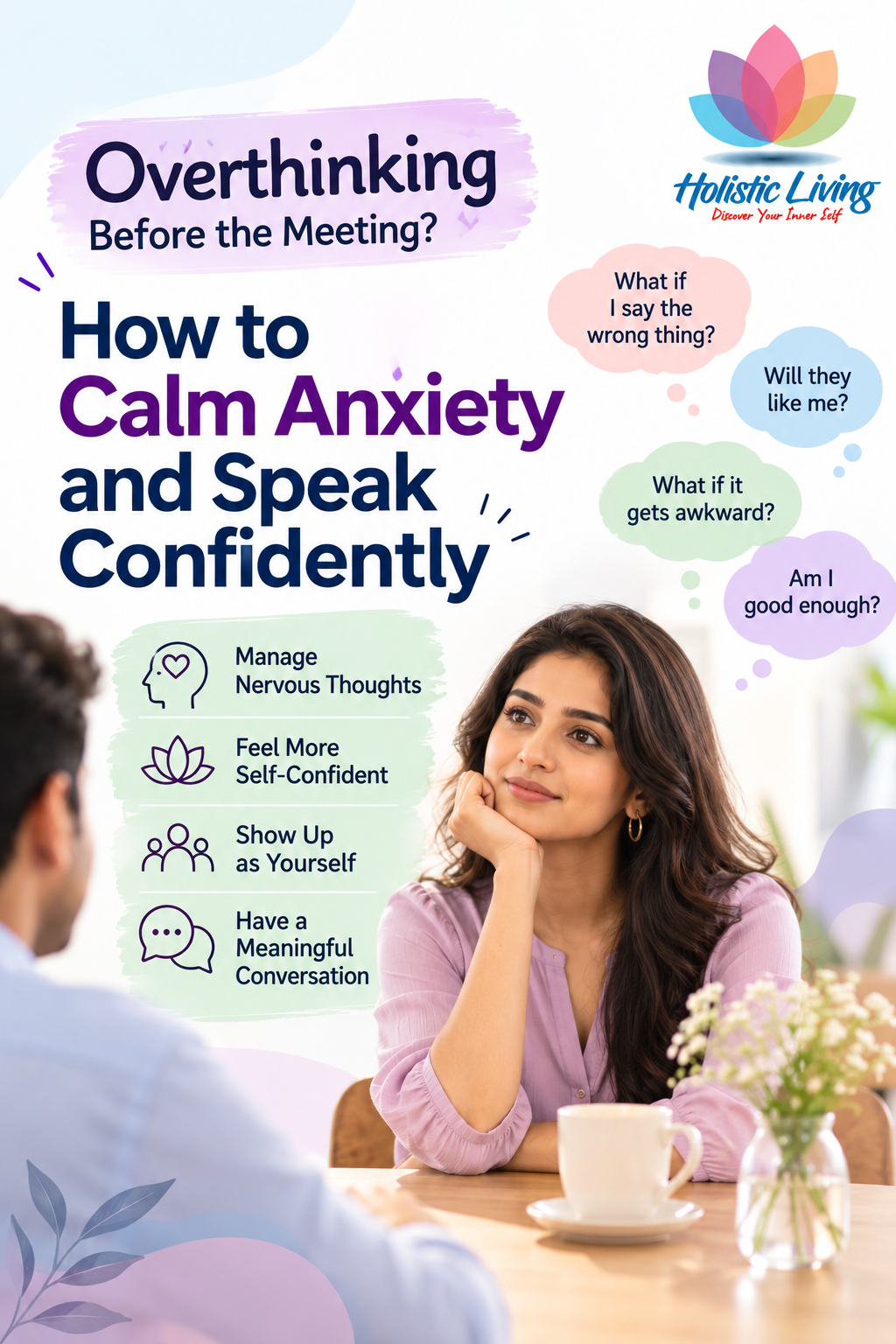
“Did I sound nervous?”
“What if they didn’t like me?”
If this sounds familiar, you are not alone.
An arranged marriage meeting can feel strangely intense. You may be meeting someone for coffee, but emotionally, it can feel like your personality, career, family, appearance, and future are being assessed at the same time.
That pressure can trigger fear of judgment, social anxiety, overthinking, self-doubt, and public speaking anxiety. Pasted markdown
But there is one idea that can change the entire conversation:
You are not there to perform.
You are there to connect.
Why Does an Arranged Marriage Meeting Feel Like an Interview?
Imagine walking into a job interview.
They ask questions.
You answer carefully.
They evaluate you.
You wait to discover whether you’ve been selected.
Now imagine carrying exactly that mindset into an arranged marriage meeting.
“What do you do in your free time?”
What answer will sound interesting?
“What do you expect from marriage?”
What do they want me to say?
“Where do you see yourself in five years?”
What if my answer is wrong?
Before long, you’re no longer having a conversation.
You’re auditioning.
And somewhere inside, one thought keeps repeating:
“Please like me.”
That mindset can make even a naturally confident person anxious.
So change the question.
Instead of asking:
“Will they choose me?”
Ask:
“Are we right for each other?”
You are not merely being evaluated.
You are evaluating too. Pasted markdown
That brings us to the first of these 20 arranged marriage meeting tips.
1. Stop Trying to “Pass” the Meeting
There is no perfect performance.
This isn’t an exam.
You are meeting another human being to understand compatibility.
That means discovering their values, personality, expectations, communication style, lifestyle, and future plans.
2. Replace “Do They Like Me?” With a Better Question
Ask yourself:
“How do I feel around this person?”
Do you feel respected?
Listened to?
Comfortable?
Free to express disagreement?
Those answers matter just as much as whether they find you impressive.
3. Prepare Topics, Not Scripts
Preparation can reduce arranged marriage meeting anxiety.
But don’t memorize paragraphs.
Know what you’d like to discuss instead:
Career.
Family.
Marriage expectations.
Children.
Finances.
Lifestyle.
Personal space.
Responsibilities.
Future goals.
You want a conversation, not a rehearsed speech.
4. Practice Your Introduction
You will probably hear:
“Tell me about yourself.”
Practice answering naturally in 30–60 seconds.
Talk about who you are, what matters to you, your work, interests, and perhaps what you value in life.
Don’t turn it into a resume.
5. Slow Down
Anxiety makes many people speak faster.
Pause.
Breathe.
Finish one thought before beginning another.
Speaking slowly can make the conversation easier for both of you.
6. Don’t Fear Silence
This one matters.
A three-second pause can feel like thirty seconds when you’re nervous.
But silence isn’t failure.
You can simply say:
“That’s an interesting question. Give me a second to think.”
That’s not awkward.
That’s thoughtful. Pasted markdown
7. Ask Questions That Reveal Personality
Don’t spend the entire meeting asking resume questions.
Instead of:
“What are your hobbies?”
Try:
“What does your ideal weekend look like?”
Instead of:
“Do you like traveling?”
Ask:
“What kind of holidays do you actually enjoy?”
Better questions create better conversations.
8. Talk About What Marriage Means to You
“Marriage” doesn’t mean exactly the same thing to everyone.
For one person, it may mean companionship.
Additionally, family responsibility.
For someone else, emotional partnership and independence.
Explore that difference.
9. Ask How They Handle Conflict
Chemistry is exciting.
Conflict style may tell you more.
Try:
“When you’re upset with someone, do you prefer talking immediately or taking some space first?”
It sounds conversational but can reveal something important.
10. Don’t Hide Every Opinion
If you disagree, you don’t need to immediately change your answer.
You can say:
“I see that differently.”
Respectful disagreement is part of genuine communication.
11. Stop Trying to Look Perfect
Additionally, you might stumble over a sentence.
Additionally, they might too.
You may make an awkward joke.
There may be an uncomfortable pause.
Welcome to being human.
One awkward moment doesn’t define your personality. Pasted markdown
12. Notice Your Body
Before the meeting, your shoulders may tighten.
Your breathing may become shallow.
Your hands may feel restless.
Notice these sensations without turning them into catastrophe.
Feeling nervous doesn’t mean the meeting is going badly.
13. Use a 60-Second Confidence Reset
Before entering:
Put both feet firmly on the floor.
Relax your shoulders.
Take a slow breath.
Look around you.
Then remind yourself:
“I don’t have to impress.”
“I am here to understand and be understood.”
Being known doesn’t require you to be perfect. Pasted markdown
14. Don’t Confuse Nervousness With Incompatibility
You may leave thinking:
“I wasn’t myself.”
Give yourself time.
First-meeting anxiety can make people quieter or more cautious than usual.
Separate your anxiety from what actually happened between you.
15. Don’t Confuse Rejection With Failure
This fear can dominate the entire meeting:
“What if they reject me?”
Yes, rejection can hurt.
But incompatibility isn’t necessarily a judgment of your worth.
Two decent people can simply want different lives. Pasted markdown
16. Watch the People-Pleasing Reflex
Do you automatically agree?
“Yes, absolutely.”
“I’m okay with anything.”
“Whatever works for the family.”
Pause.
Marriage involves your life too.
Confidence includes being able to respectfully express what matters to you.
17. Ask Yourself What You’re Afraid They’ll Discover
This can reveal the real source of your anxiety.
Maybe you’re afraid they’ll discover you’re shy.
Introverted.
Career-focused.
Emotionally sensitive.
Unsure about something.
Or different from your family’s expectations.
Ask yourself:
“Why does this part of me feel unacceptable?”
Sometimes the fear isn’t really about speaking.
It’s about being genuinely seen. Pasted markdown
18. Stop the Post-Meeting Investigation
Afterward, don’t analyze every facial expression.
“Why did they look away when I said that?”
“Why did they take three seconds to reply?”
Reflect on the meeting.
But don’t turn it into forensic analysis.
Ask bigger questions.
Did you feel heard?
Did the conversation flow?
Were your values compatible?
Were you comfortable?
19. Practice Before the Real Meeting
If fear of speaking in arranged marriage meetings is intense, practice.
Talk aloud in front of a mirror.
Record your introduction.
Role-play with someone you trust.
Practice eye contact.
Practice saying:
“I disagree.”
“I need time to think about that.”
“That’s important to me.”
Confidence isn’t always something you suddenly discover.
Additionally, you build it through repetition. Pasted markdown
However, 20. Remember Why You’re Really There
Additionally, you aren’t there to become the most impressive version of yourself for sixty minutes.
You’re exploring whether two real lives could work together.
So let the real you enter the room.
Moreover, this is the unrehearsed version.
Nevertheless, not the family-approved version.
In contrast, this is not the version aimed at avoiding rejection.
However, you.
What If Anxiety Keeps Taking Over?
Some nervousness before an arranged marriage meeting is understandable.
But if fear of judgment, social anxiety, overthinking, low confidence, or communication anxiety repeatedly causes you to avoid meetings, lose sleep, panic, or struggle to express yourself, it may be worth exploring more deeply.
Approaches such as Cognitive Behavioural Therapy (CBT), REBT, gradual exposure, assertiveness training, role-play, mindfulness, ACT, DBT skills, and self-compassion may be used to address different aspects of communication anxiety.
At Holistic Living Wellness Studio, support is available for people experiencing anxiety, fear of judgment, self-doubt, and difficulty communicating confidently during arranged marriage conversations. The source article also offers a free 10-minute consultation.
And before your next meeting, remember this:
In addition, you don’t need the perfect answer.
However, you don’t need to eliminate every nervous feeling.
Additionally, you don’t need to make everyone like you.
Moreover, you need enough confidence to listen, speak honestly, ask meaningful questions, and decide for yourself.
Because the goal of an arranged marriage meeting isn’t to prove that you’re worthy of being chosen.
It’s to give two people the chance to discover whether they can choose each other—without either person having to pretend to be someone they’re not.